About encaustic cement tiles
What are encaustic cement tiles?
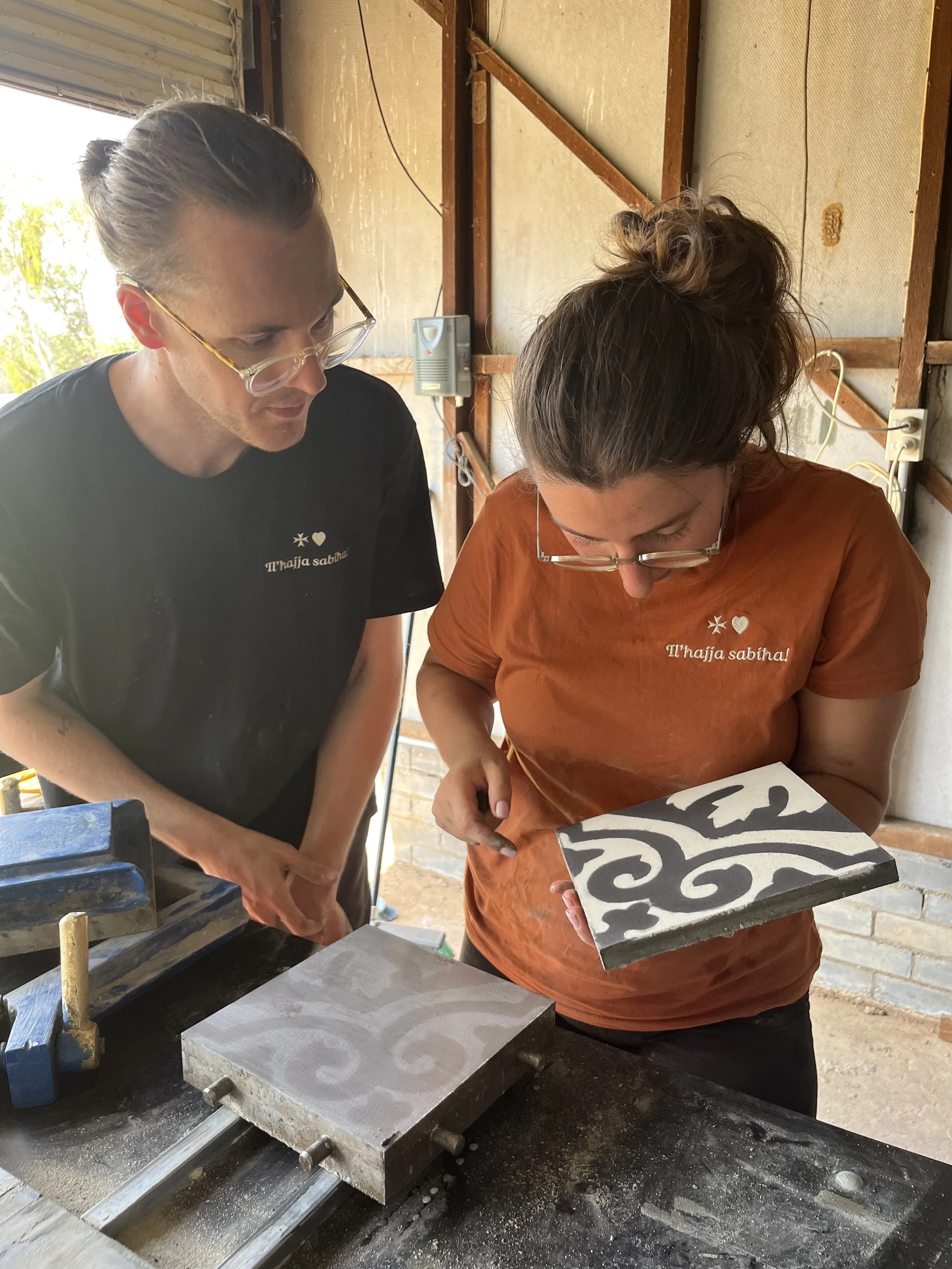
Encaustic tiles are crafted by hand, not by machine — and unlike ceramics, they’re not painted, glazed, or fired.
Each tile is made individually using coloured cement and sand, resulting in a piece that’s as unique as the artisan who created it. Built to endure and evolve, these tiles stand up beautifully to time, foot traffic, and everyday life without losing their charm or quality.
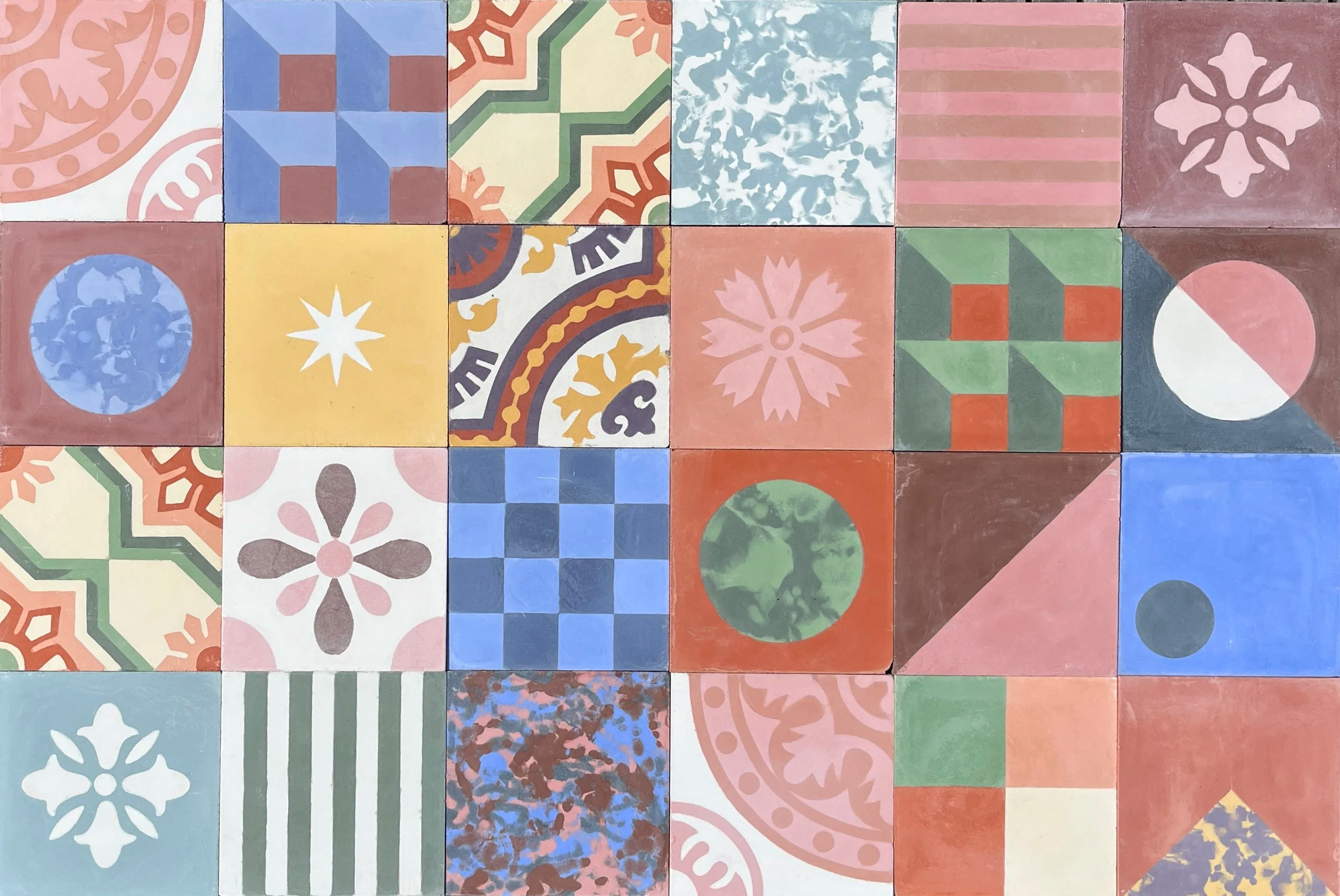
From bold geometrics to delicate florals, encaustic tiles offer endless design possibilities and can be customised to suit any style or space. Their naturally slip-resistant surface and easy-to-clean finish make them as practical as they are beautiful — ideal for kitchens, bathrooms, and rooms that call for a bit more character.
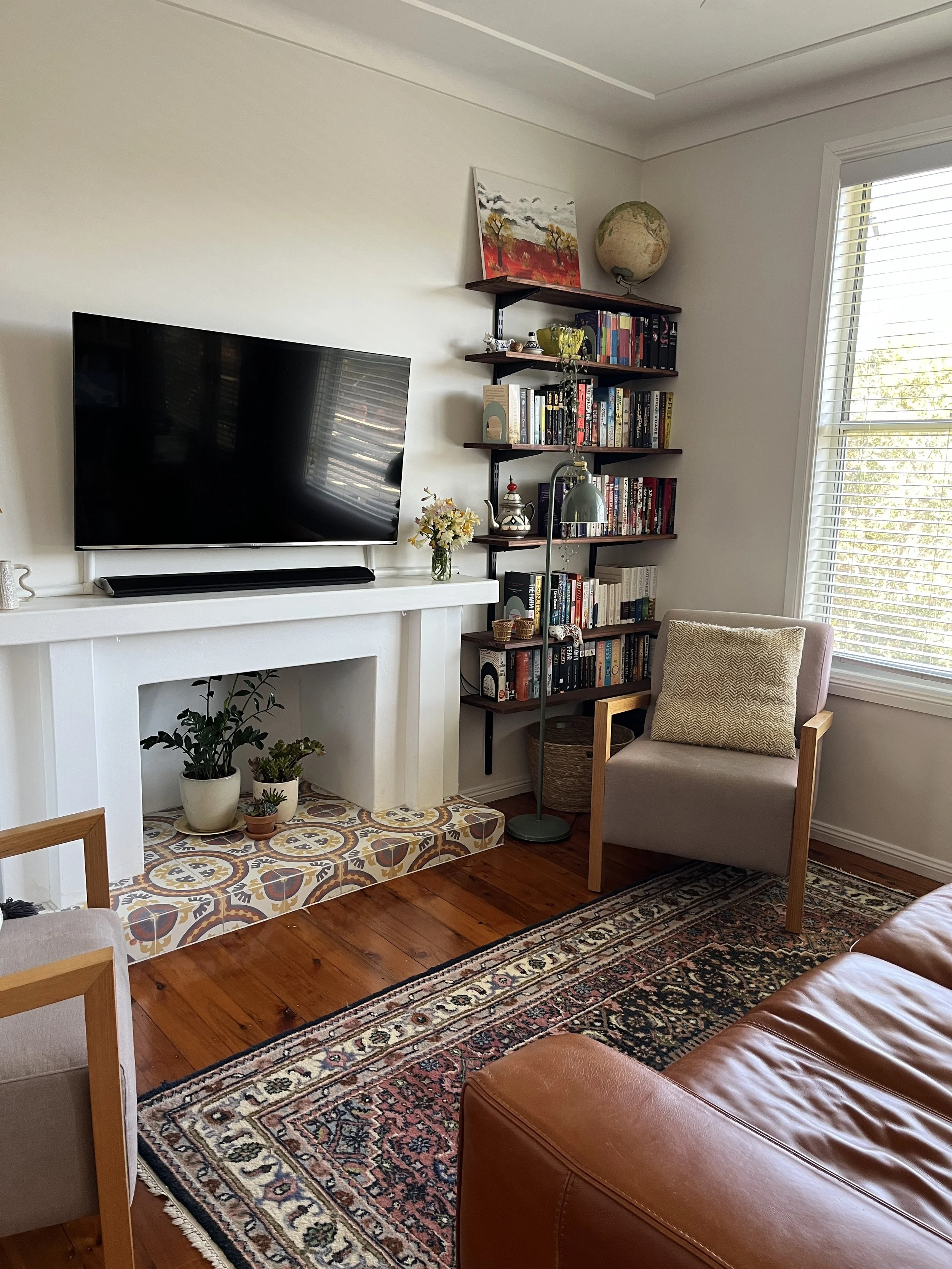
With a history spanning centuries, encaustic tiles have truly stood the test of time. Their enduring character and handcrafted appeal bring a touch of history, artistry, and sophistication to any home.
A brief history
Our tiles are known by many names — cement tiles, encaustic tiles, or hydraulic tiles — but all share the same artisanal heritage.
First created in southern France and Spain in the mid-1800s, these tiles emerged during the height of the Industrial Revolution. Despite the name “encaustic,” they contain no wax or glaze; the term was borrowed from earlier clay tiles whose patterns resembled wax inlay.
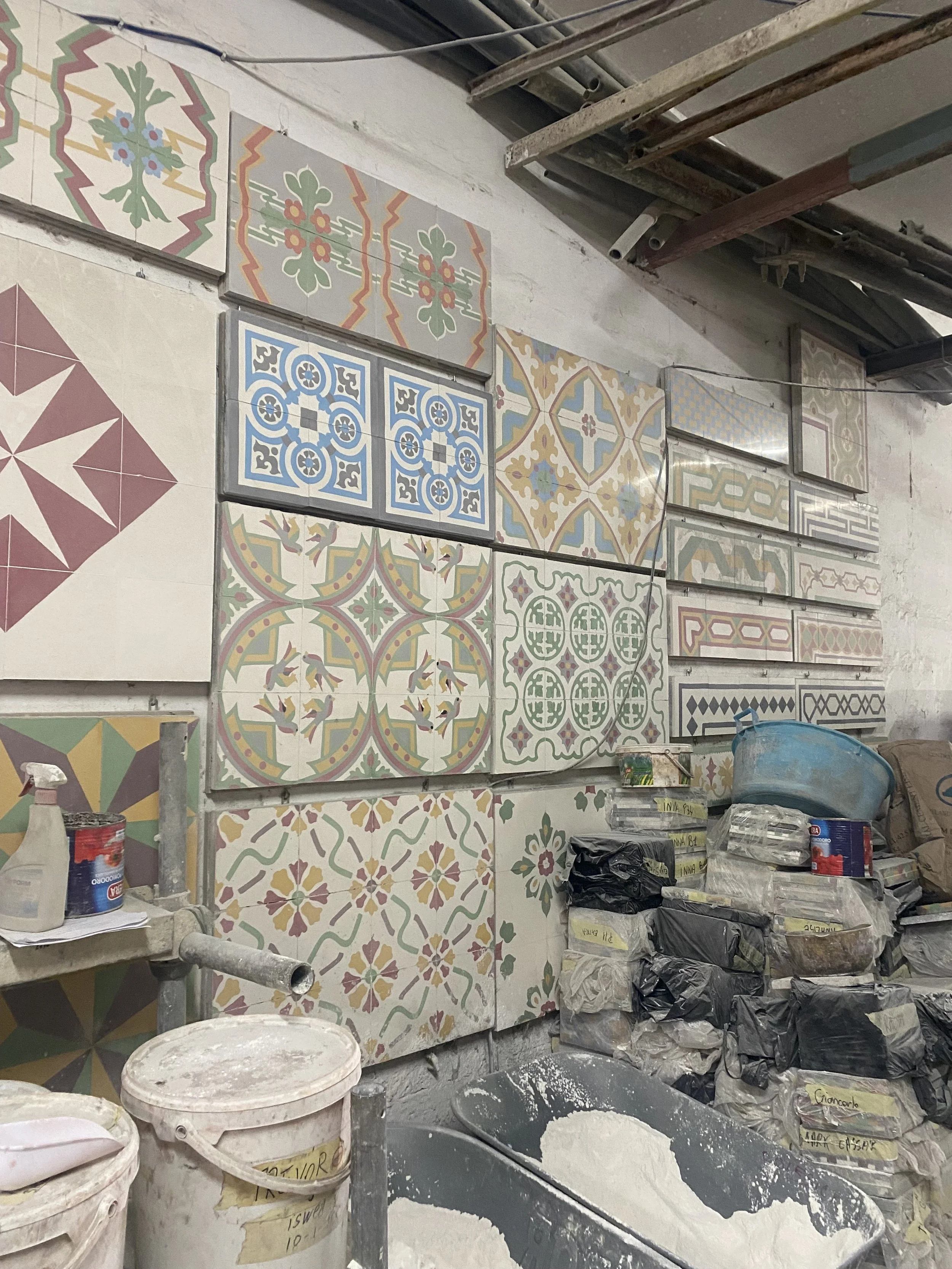
From Europe, these handcrafted tiles spread across North Africa, the Middle East, and Latin America, becoming an integral part of local architecture and culture. The craft gained popularity in Malta, my family’s home, and the tiles produced there had their own distinctive designs.
In places like Morocco, Vietnam, and Cuba, they graced homes, courtyards, and grand buildings alike — admired for their vivid colour and intricate design. By the early 1900s, they could be found everywhere from Parisian apartments to Spanish mission-style homes.
Although production declined after World War II with the rise of cheaper ceramic and vinyl alternatives, the 21st century has seen a revival. Today, encaustic tiles are celebrated once again for their craftsmanship, sustainability, and timeless beauty — a lasting testament to the art of handmade design.
Why choose our tiles?
If you’re looking for perfect, uniform tiles, encaustic tiles may not be for you. Their beauty lies in their imperfections — a mark of the human hand and the natural materials used to create them.
While mass-produced “encaustic-look” tiles imitate the style, they can’t replicate the depth of colour, texture, and character found in genuine handmade cement tiles. Each of ours is individually crafted, meaning subtle variations in colour, pattern, and texture are to be expected.
You may notice slight differences in size or thickness, soft edges, or gentle irregularities such as blurred lines or faint discolouration. Once installed, these details come together to create a surface that feels rich, lived-in, and full of soul.
A chalky residue may appear before installation — a natural result of the curing process. As the tiles dry after installation, their tones will settle and mature, often with light shadowing that enhances their depth. Over time, encaustic tiles develop a beautiful patina, growing richer with age and use.
Because encaustic tiles are porous, they must be sealed properly to protect against stains and wear. With the right sealant and minimal upkeep, they’ll age gracefully and last a lifetime — becoming an enduring part of your space’s story.
Our Tiles
See our current range of encaustic cement tiles, made right here in Australia. Or get in touch to collaborate and design your dream tiles!